Aluminum
Aluminum 6101
Aging Procedure
Aging is done at different temperatures and times, depending upon the finished temper desired as follows : T6 350 F for 20 hours and air cool. T61 440 F for 6 hours and air cool. T63 380 F for 19 hours and air cool.
Annealing Procedure
Annealing is done at 775 F for 3 hours at temperature, followed by controlled cooling at a rate of 50 F per hour down to 500 F, then air cool. A stress relief anneal (after cold working) may be done at 650 F with air cooling.
Applications
Electrical bus bar conductor applications for use in enclosed bus electrical installations.
Cold Workability
Easily cold worked, or cold formed in either the annealed or aged conditions.
Forgeability
No data, although the alloy is considered forgeable.
Formability
Forming characteristics are good by conventional processes. See also Cold Working.
Hardening Procedure
Hardens due to cold working or aging heat treatment -- see "Aging".
Heat Treatability
The AL 6061 alloy does respond to heat treatment which is accomplished by annealing and relatively low temperature aging. See "Annealing" and "Aging".
Hot Workability
No data. Hot working generally is not required because the alloy has very good cold working characteristics.
Machinability
Machinability by conventional means is good. Either carbide or high speed tool steel tooling may be used. Use of an oil base lubricant during machining operations is recommended.
Other Mechanical Properties
Shear strength values are: T6 - 22 ksi. T63 - 21 ksi. T61 - 17 ksi
Other Physical Properties
Electrical conductivity 56% of copper.
Principle Design Features
This is a high electrical conductivity aluminum alloy also possessing good mechanical (strength) properties. It is hardened (strengthened) by heat treatment.
Tempering Procedure
Not applicable.
Weldability
Welding by all of the standard processes may be done, including gas torch welding. The preferred method of welding is by means of inert gas arc welding for best results. Filler rod of the same alloy should be used. When welded in the heat treated condition the subsequent parts will be lower in strength because of weld heat input.
Known Forms
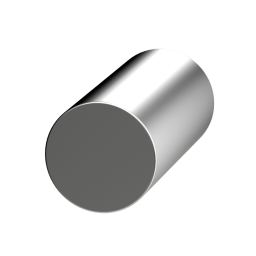
Angle
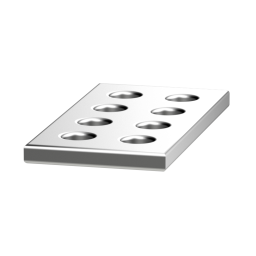
Bus Bar
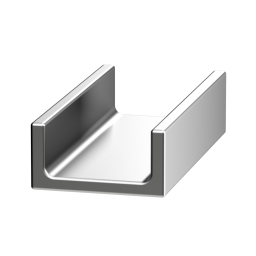
Channel
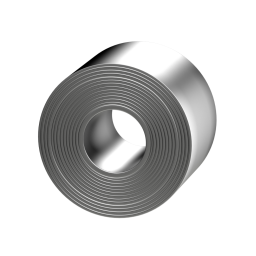
Coil
Disc
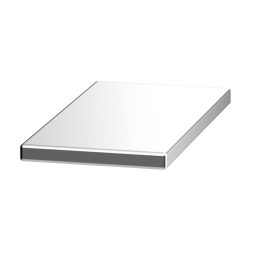
Flat Bar
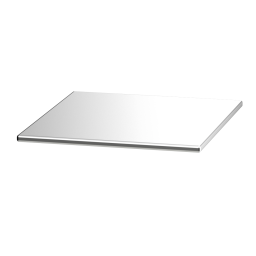
Foil
Hollow Bar
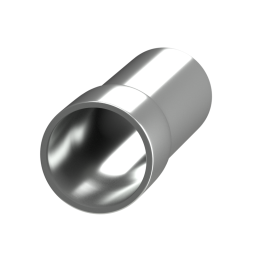
Pipe
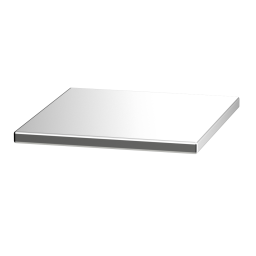
Plate
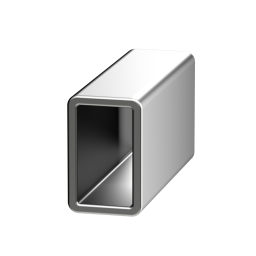
Rectangle Tube
Ring
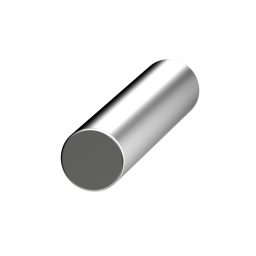
Rod
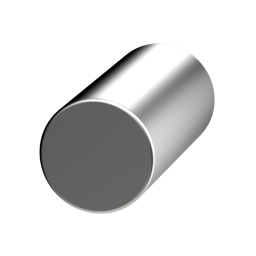
Round Bar
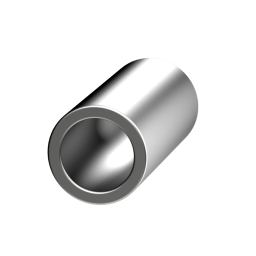
Round Tube
Sheet
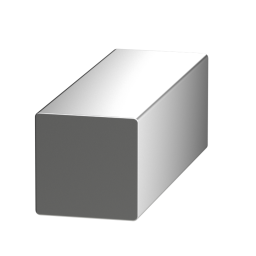
Square Bar
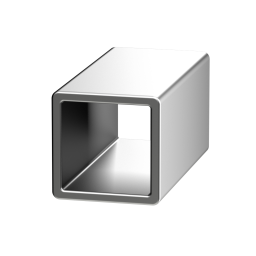
Square Tube
Strip
Tee
Additional Data
Specifications
B317,J454,A96101Chemical Elements
| Aluminum | Balance |
| Boron | 0.06 max |
| Chromium | 0.03 max |
| Copper | 0.1 max |
| Iron | 0.5 max |
| Magnesium | 0.35 - 0.7 |
| Manganese | 0.03 max |
| Remainder Each | 0.03 max |
| Remainder Total | 0.1 max |
| Silicon | 0.3 - 0.7 |
| Zinc | 0.1 max |
Physical Properties
Density: 0.097lb/in³
Melting Point: 1090°F
Specific Gravity: 2.7
Mechanical Properties
Modulus of Elasticity – Tension: 10MSI
Thermal Conductivity: 100BTU/hr·ft·°F
Thermal Conductivity
| Condition | Temperature | Conductivity |
|---|---|---|
| T6 | 68 °F | 120 BTU/hr·ft·°F |
Thermal Expansion
| Condition | Min | Max | Expansion Coefficient |
|---|---|---|---|
| T6 | 68 °F | 212 °F | 12.8 μin/in·°F |