Aluminum
Aluminum 7175
Aging Procedure
This is an age hardenable alloy. Consult the supplier for aging treatment details.
Annealing Procedure
No data available. Consult the alloy supplier.
Applications
Typical applications include machined fittings as used in the aircraft industry.
Cold Workability
Cold working may be done by conventional methods, again allowing generous bend radii as with 7075 alloy.
Forgeability
This is basically a forging alloy. For data on forging temperature range consult the alloy supplier.
Formability
This is basically a forging alloy and thus is formed by die or hand forging.
Hardening Procedure
Hardens by means of heat treatment or by cold work.
Heat Treatability
The alloy is heat treatable. Consult the supplier for details.
Hot Workability
Hot working, as with forging, may be done with this alloy. Consult the supplier for details.
Machinability
The alloy is machinable. However no specific comments are available. Consult the supplier.
Principle Design Features
7175 is a high strength, heat treatable, forging alloy. It has an excellent combination of toughness and strength, similar to 7075 alloy except that the 7175 version has superior toughness and tensile strength.
Tempering Procedure
Not applicable.
Weldability
No information available. Consult the alloy supplier.
Known Forms
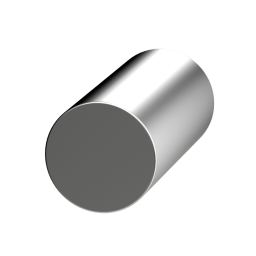
Angle
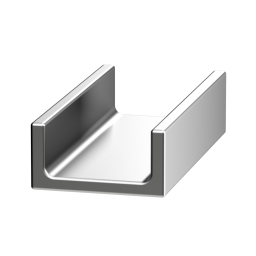
Channel
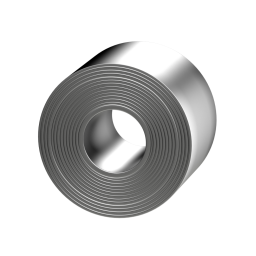
Coil
Disc
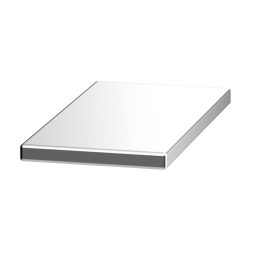
Flat Bar
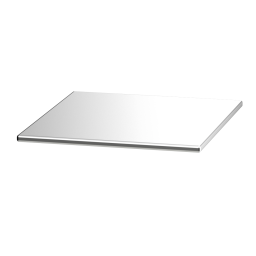
Foil
Hollow Bar
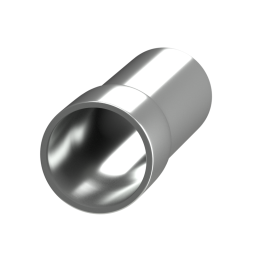
Pipe
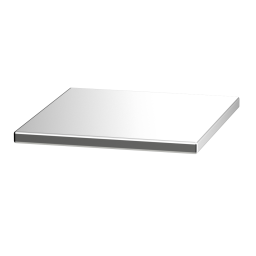
Plate
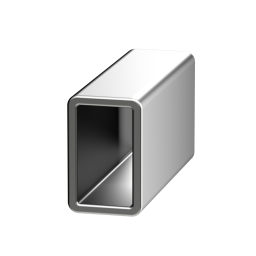
Rectangle Tube
Ring
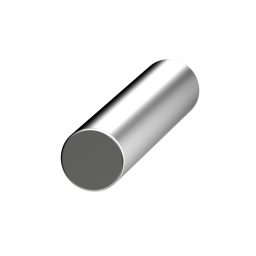
Rod
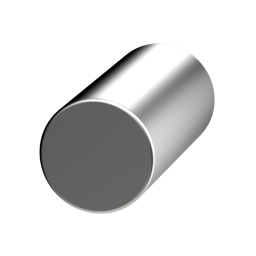
Round Bar
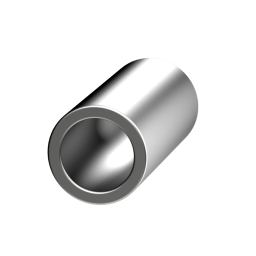
Round Tube
Sheet
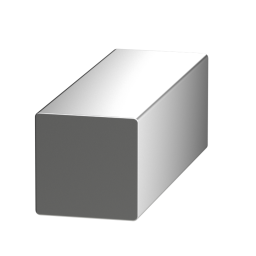
Square Bar
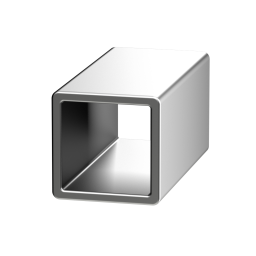
Square Tube
Strip
Tee
Additional Data
Chemical Elements
| Aluminum | Balance |
| Chromium | 0.18 - 0.28 |
| Copper | 1.2 - 2 |
| Iron | 0.2 max |
| Magnesium | 2.1 - 2.9 |
| Manganese | 0.1 max |
| Remainder Each | 0.05 max |
| Remainder Total | 0.15 max |
| Silicon | 0.15 max |
| Titanium | 0.1 max |
| Zinc | 5.1 - 6.1 |
Physical Properties
Density: 0.101lb/in³
Melting Point: 900°F
Poissons Ratio: 0.33
Specific Gravity: 2.8
Mechanical Properties
Modulus of Elasticity – Tension: 10.3MSI
Modulus of Elasticity – Torsion: 3.9MSI