Brass
Brass Naval Brass, Medium Leaded
Annealing Procedure
The annealing temperature for this alloy is between 800 and 1100 F.
Applications
Used for fasteners and hardware for corrosion resistant service, including marine applications. Also used for high strength cold headed products.
Cold Workability
The capacity for cold working this alloy is rated as "poor".
Forgeability
The hot forgeability rating of this alloy is 90. (Forging Brass=100). The recommended hot working temperature for this alloy is between 1200 and 1400.
Hot Workability
This alloy's capacity for being hot formed is rated as "good".
Machinability
The machinability rating of this alloy is 50. (Where Alloy 360 FC Brass is 100).
Principle Design Features
Brasses (Copper-Zinc-Tin), Naval Brass, Medium Leaded. Excellent hot forgeability, good corrosion resistance. Free-cutting.
Weldability
Soldering is rated as "excellent", brazing is rated as "good", oxyacetylene welding is "not recommended", gas shielded arc welding is "not recommended", coated metal arc welding is "not recommended", spot welding is "not recommended", seam welding is "not recommended", and butt welding is rated as "fair".
Known Forms
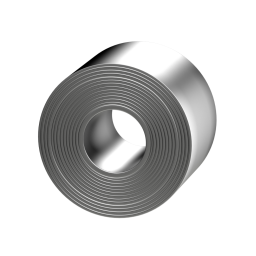
Coil
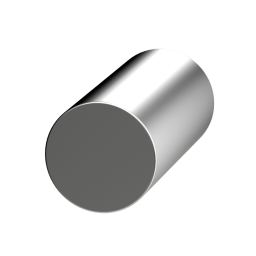
Disc
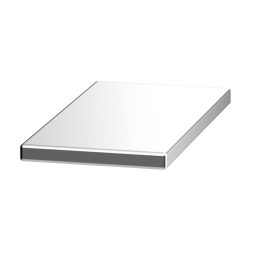
Flat Bar

Foil
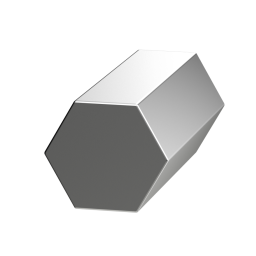
Hexagon Bar
Hollow Bar
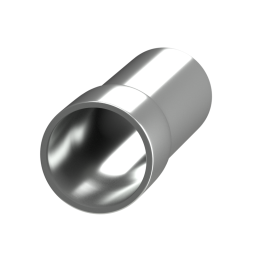
Pipe
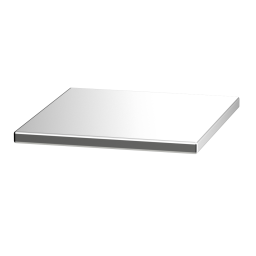
Plate
Ring
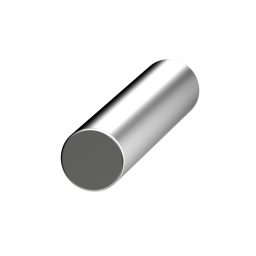
Rod
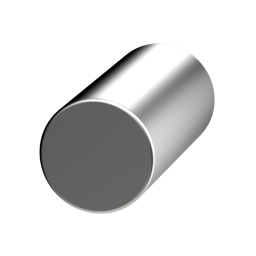
Round Bar
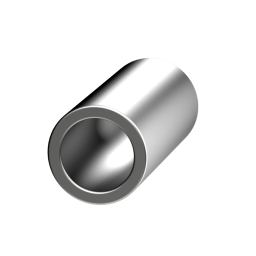
Round Tube
Sheet
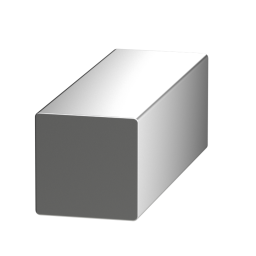
Square Bar
Strip
Additional Data
Specifications
B124,B21,B283,B639,C48200Chemical Elements
| Copper | 59 - 62 |
| Iron | 0.1 max |
| Lead | 0.4 - 1 |
| Remainder Each | Zn |
| Remainder Total | Cu + sum of named elements 99.6 min |
| Tin | 0.5 - 1 |
Physical Properties
Density: 0.305lb/in³
Electrical Resistivity: 39.9µΩ·cm
Melting Point: 1630°F
Mechanical Properties
Modulus of Elasticity – Tension: 15MSI