Nickel
Nickel Memory Alloy
Applications
A variety of electrical, medical, automotive and appliance applications have been identified. Great in corrosive atmospheres and tight places. For example, memory alloys are used as actuators in place of solenoids can be 1000 time smaller for the same work done.
Machinability
Memory alloy, due to its high alloy content, tends to be very hard to cut and machine.
Principle Design Features
Basically a nickel - titanium alloy that has a shape memory due to its chemistry. Memory metal's prime function is to contract in length and generate force or motion when heated. The metal contracts in a way similar to a human muscle when electrically driven.
Known Forms
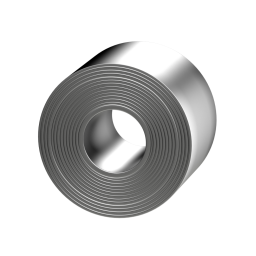
Coil
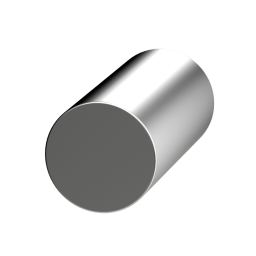
Disc
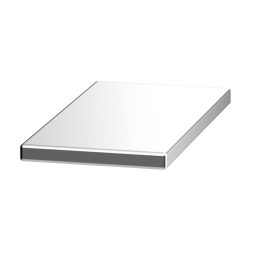
Flat Bar
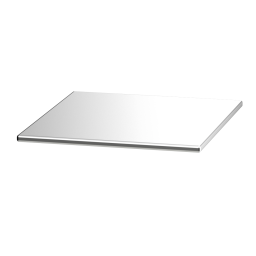
Foil
Hollow Bar
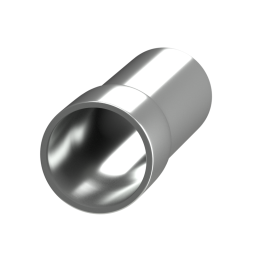
Pipe
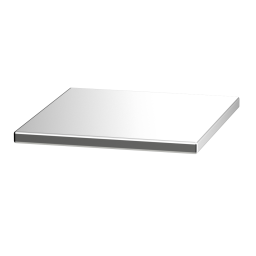
Plate
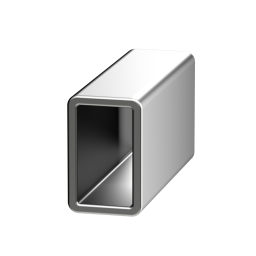
Rectangle Tube
Ring
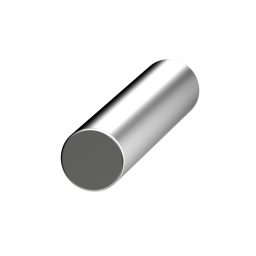
Rod
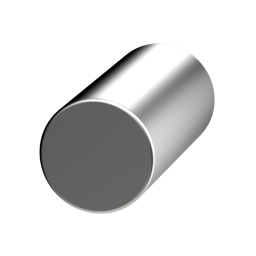
Round Bar
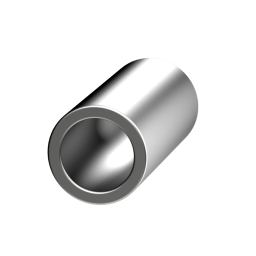
Round Tube
Sheet
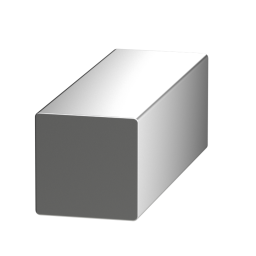
Square Bar
Strip
Additional Data
Chemical Elements
| Nickel | 50 nom |
| Titanium | 50 nom |
Physical Properties
Density: 0.235lb/in³
Melting Point: 2282°F
Specific Heat: 0.2BTU/lb·°F