Steel
Steel D6AC
Aging Procedure
Not applicable to this alloy.
Annealing Procedure
Anneal at 1500 F followed by air cooling.
Applications
Typical applications are for aircraft landing gear, axles or shafts and similar uses that require very good combination of fatigue strength and toughness.
Cold Workability
This alloy cold works readily in the annealed condition.
Forgeability
The alloy is forgeable but no details are available - consult the alloy supplier.
Formability
Formability in the annealed condition is good.
Hardening Procedure
See "Heat Treatment" and "Tempering".
Heat Treatability
Heat treat for hardening of this alloy must be preceded by a normalizing treatment at 1700 F followed by air cooling. The alloy can then be hardened by reheating to 1700 F followed by an oil quench in oil that is at 150 to 250 F. It is important to temper normalized or heat treated parts immediately so as to avoid cracking - see "Tempering".
Hot Workability
Hot working may be done - consult the alloy supplier for details.
Machinability
D6AC machines like any of the other low alloy steels. Machining is best done with the alloy in the normalized and tempered condition. Machining, or grinding, of parts that have been heat treated to 200 ksi, or greater, require a 3 hour stress relief anneal after such machining.
Principle Design Features
D6AC is a low alloy vacuum melted steel containing several other elements and with a carbon content of 0.42 to 0.48%. The hardenability of this alloy is better than that of AISI 4340 and D6AC can be heat treated to strengths ranging from 180 to 260 ksi.
Tempering Procedure
Temper immediately after hardening by heating at a temperature that will give the desired strength level as follows: For 260 ksi temper at 575 F, for 200 ksi temper at 1100 F and for 180 ksi temper at 1150 F all for a minimum of 2 hours and all followed by air cooling. A repeat, or second, temper as per above is also required.
Weldability
D6AC may be welded by TIG method for thin sections or by Gas Metal Arc Welding (GMAW) for heavy sections using a filler rod of the same alloy. Care should be used to maintain preheat and interpass weld temperature at 450 to 550 F. Restrained weldments should subsequently be post-heated at 600 F, air cooled to 300 F and then, at once, be stress relieved in a furnace at 1000 F followed by re-normalizing and re-tempering.
Known Forms
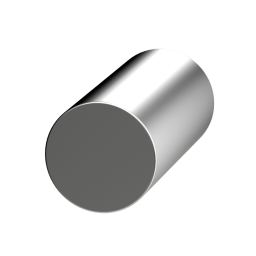
Angle
Billet
Cee
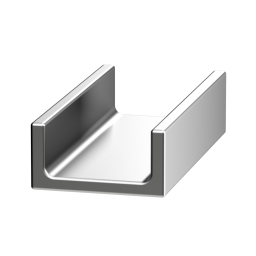
Channel
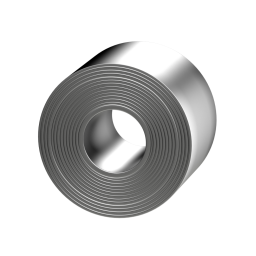
Coil
Disc
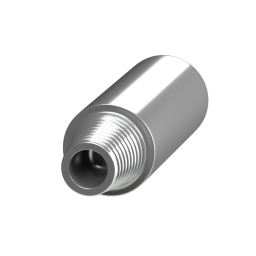
Drill Rod
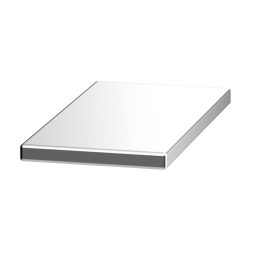
Flat Bar
H-Beam
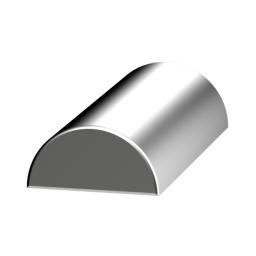
Half Round
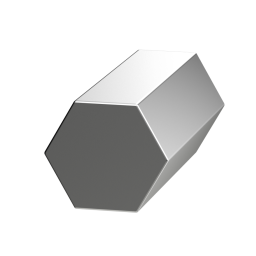
Hexagon Bar
Hollow Bar
Octagon Bar
Piling
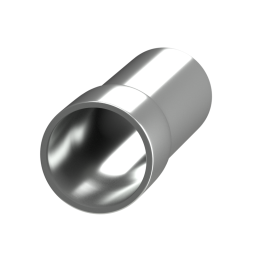
Pipe
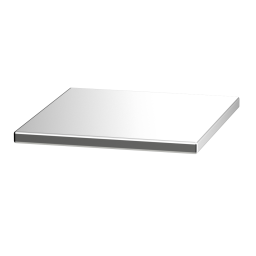
Plate
Precision Ground Bar
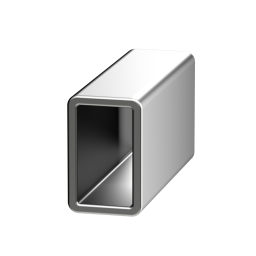
Rectangle Tube
Ring
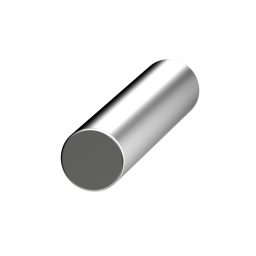
Rod
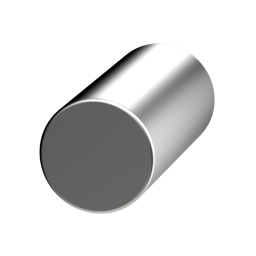
Round Bar
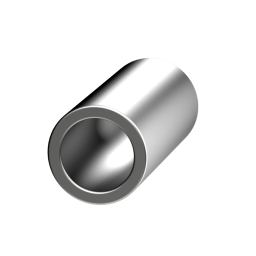
Round Tube
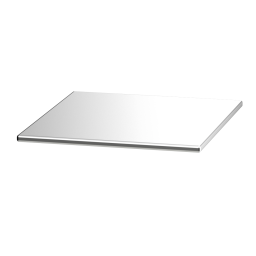
Sheet
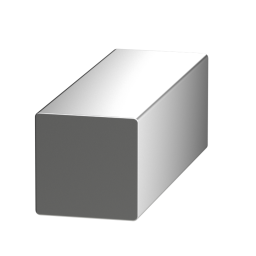
Square Bar
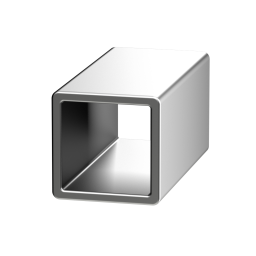
Square Tube
Standard Beam
Strip
Tee
Treadplate
Wide Beam
Zee
Additional Data
Specifications
6431,6432,6438,6439,A579 (23),S-8949,K24728Physical Properties
Density: 0.284lb/in³
Melting Point: 2600°F
Specific Gravity: 7.8
Specific Heat: 0.116BTU/lb·°F
Mechanical Properties
Modulus of Elasticity – Tension: 32MSI
Thermal Conductivity: 2.5BTU/hr·ft·°F
Thermal Expansion: 7µin/in·°F