Steel
Steel High Mang 12/15
Principle Design Features
This alloy was invented by Sir Robert A. Hadfield in 1882 and was one of the first high-alloy steels. The background shows the face centered cubic (FCC) crystal structure. In the case of high manganese steel this is the desired structure after heat treatment and quenching in water. Many metals, including Gold, also have the FCC crystal structure. This is also called the austenite phase of steel and is characterized by being very ductile. However, when austenitic manganese steel is deformed under high impact loads (in such applications as crushing rock and railroad switches) it work hardens severely. That is, it becomes very hard and resistant to wear and abrasion. The common Hadfield's grade of high manganese steel contains about 1.1% Carbon and 12% Manganese, by weight. Other elements, such as Molybdenum, Chromium, etc., can be added to increase the hardness of the base metal and improve the work hardening rate. This usually results in lower toughness, however, and can cause failure of parts in service unless heat treating is done properly.
Known Forms
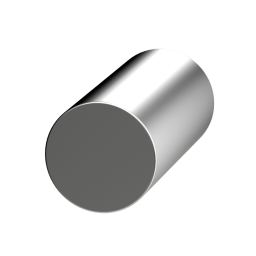
Angle
Billet
Cee
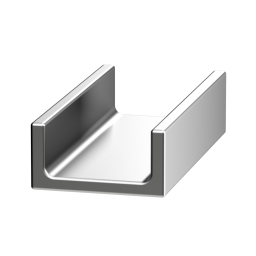
Channel
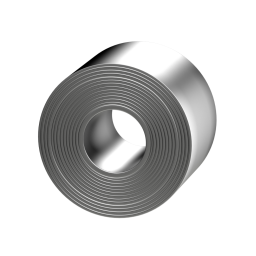
Coil
Disc
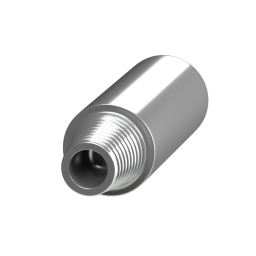
Drill Rod
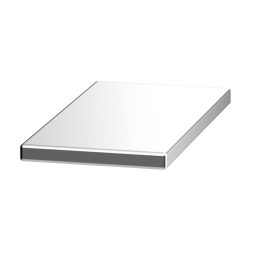
Flat Bar
H-Beam
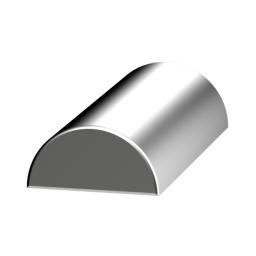
Half Round
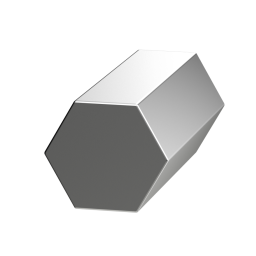
Hexagon Bar
Hollow Bar
Octagon Bar
Piling
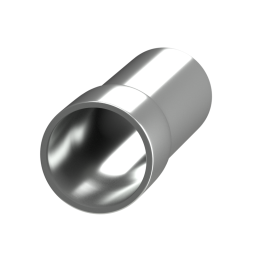
Pipe
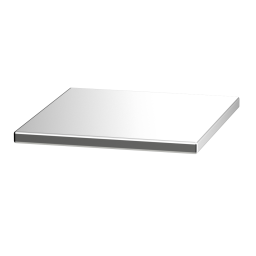
Plate
Precision Ground Bar

Rectangle Tube
Ring
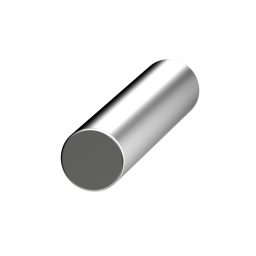
Rod
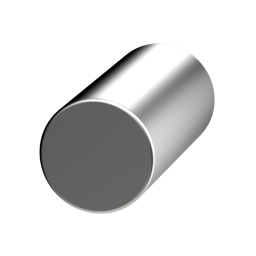
Round Bar
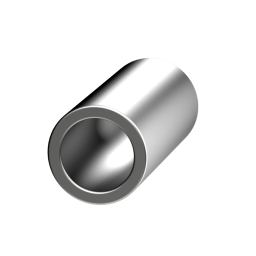
Round Tube
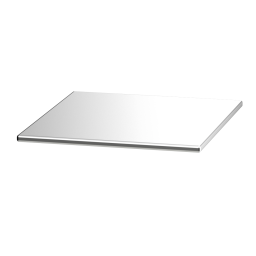
Sheet
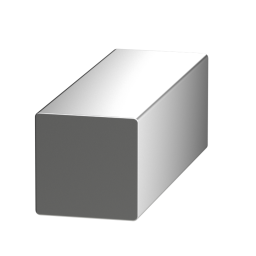
Square Bar
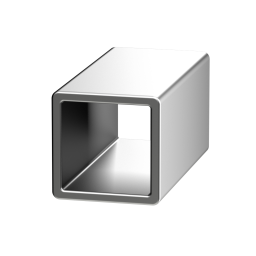
Square Tube
Standard Beam
Strip
Tee
Treadplate
Wide Beam
Zee
Additional Data
Chemical Elements
| Carbon | 0.9 - 1.2 |
| Chromium | 5 max |
| Iron | Balance |
| Manganese | 12 - 15 |
Physical Properties
Density: 0.283lb/in³