Titanium
Titanium 7-4
Cold Workability
The cold working characteristics of this material are similar to those of austenitic stainless steels. In multiple forming operations, intermediate stress relieving is recommended to offset the alloy's tendency to work harden. Post-work annealing is required to re-attain optimum performance characteristics.
Formability
This alloy may be hot or cold formed. Popular methods include hydropress, stretch or drop-hammer. This material responds similarly to 300 series stainless steels.
Hot Workability
Hot forming will reduce both the springback and required forming forces, and will increase the overall ductility of the material.
Machinability
As a family, titanium and its alloys have developed a mystique as a nightmare to machine. This is simply not the case. Experienced operators have compared its characteristics to those found in 316 stainless steel. Recommended practice includes high coolant flow(to offset the material's low thermal conductivity), slow speeds and relatively high feed rates. Tooling should be tungsten carbide designations C1-C4 or cobalt type high speed tools.
Known Forms
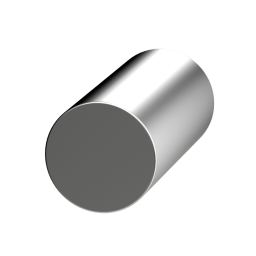
Billet
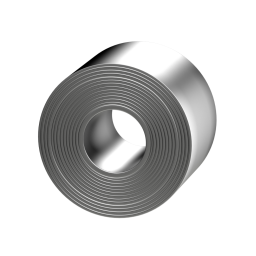
Coil
Disc
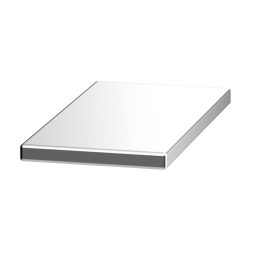
Flat Bar
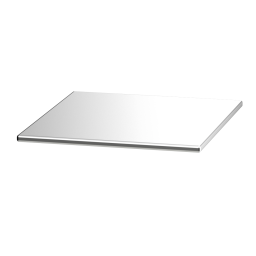
Foil
Hollow Bar
Ingot
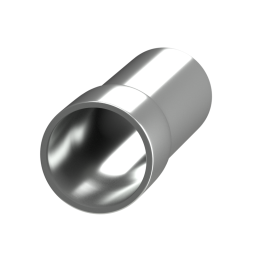
Pipe
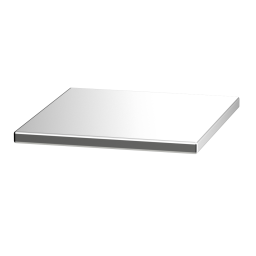
Plate
Ring
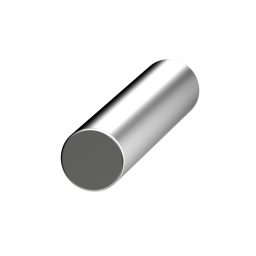
Rod
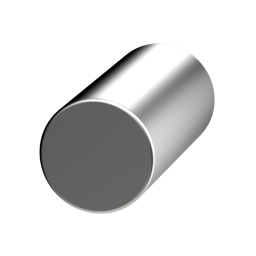
Round Bar
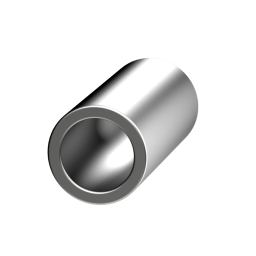
Round Tube
Sheet
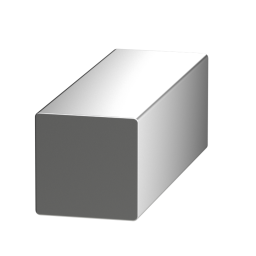
Square Bar
Strip
Additional Data
Chemical Elements
| Titanium | Balance |
Physical Properties
Density: 0.163lb/in³